
What does OSHA require for farm sanitation?
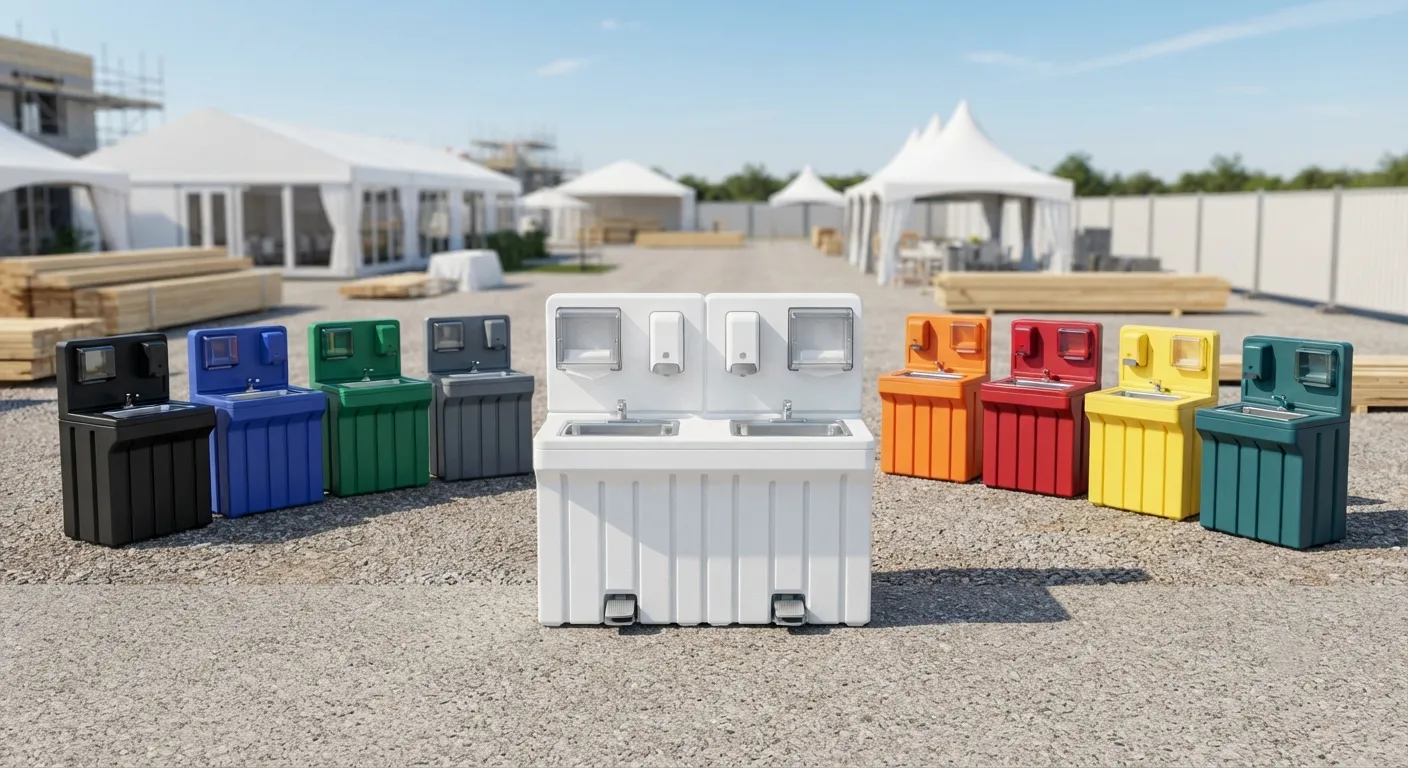
Agricultural field sanitation falls under OSHA 1928.110, not the general construction rule. It calls for potable water, toilet facilities and handwashing, sized at one facility per 20 hand-labor employees, and every unit has to sit within a quarter mile walk of wherever people are working. That is a real distance requirement, not a guideline, so a crew spread across a large College Station property may need two or three portable toilet rental placements instead of one central bank of units. Compare that to construction work, which falls under OSHA 1926.51(c) and its own ratio table, or general industry sites, which use 29 CFR 1910.141(c)(1)(i). A farm running a packing shed alongside field labor sometimes needs to think about both standards at once. Handwashing setups need soap and a towel or drying device under 29 CFR 1910.141(d)(2); hand sanitizer alone does not meet it. If your crew is mixing or applying pesticides or herbicides, OSHA 1926.51(f)(1) adds a washing requirement specific to that contaminant exposure. A handwashing station rental or a simple portable sink rental covers that need without adding plumbing to a barn that never had it. For crews unsure which ratio applies to their operation, our OSHA portable toilet requirements page breaks down the difference further.
How many units does a College Station farm actually need?
Run the math on crew size first, then add walking distance. A 20-person crew clears the OSHA 1928.110 minimum with a single unit, but if that crew splits across two fields a half mile apart, one unit no longer satisfies the quarter-mile rule. Harvest season in College Station often means temporary labor spikes, and a operation that runs lean most of the year can need three or four units for six weeks straight. That is where a monthly porta potty rental beats renting week to week, since farms rarely know the exact end date of a harvest push. Our how many porta potties do I need guide walks through the ratio math for mixed crew sizes. Standard units run 44 by 48 inches on the ground and stand about 92 inches tall, small enough to tuck at a field edge or fence line without blocking equipment. For remote fields with no water source at all, a holding tank rental or septic-serviced unit keeps things running without a well hookup. Ranches running cattle operations near Snook, 15.9 miles southwest of College Station, or out toward Tunis, 18.0 miles west, deal with this exact placement problem every season.
| unit | duration | low | typical | high |
|---|---|---|---|---|
| standard | day | 100 | 150 | 350 |
| standard | week | 130 | 200 | 500 |
| standard | month | 125 | 200 | 325 |
Where should restrooms go on a working farm?
Put them close to the work but clear of equipment lanes and irrigation runs. A restroom parked in a turn row gets clipped by a combine or a truck making a wide swing, and a unit sitting in low ground floods after the first hard rain. Our porta potty placement guide covers surface and slope in more detail, but the short version for farm ground: pick high, firm, level spots near the crew's actual work area, not just near the road for driver convenience. Delivery does require some planning of its own. A roll-off or restroom trailer delivery needs about 60 feet of straight clearance behind the truck, which matters on farms with tight gates or fence lines. If your operation also needs a temporary fence rental around a staging yard or a construction dumpster rental for a barn rebuild, plan those deliveries around the same clearance. Farms running septic-serviced holding tanks should also know that a typical 1,000-gallon residential tank gets pumped every 3 to 5 years depending on tank size and household or crew load; ag operations with heavier use should check that interval more often through our septic pumping service page. Properties out past Bryan, 11.0 miles northwest, or Lake Bryan, 16.0 miles northwest, still fall inside our regular delivery range from College Station.
Larger operations running a hunting lease, event barn, or agritourism stop alongside row crops sometimes need a step up from a standard unit. A deluxe flushable porta potty or a small restroom trailer rental works well for a farm hosting weddings or fall festivals on the same land where crews work weekdays. County fair operators and county fair restrooms planning follow a similar logic: base units for staff, upgraded units for guests. Whatever the mix, request a quote once you know crew size and site layout, and our FAQ page covers scheduling and service frequency questions in more depth.
Do we need a separate handwashing station if we already have a sink in the barn?
Not always, but distance matters. If your barn sink sits more than a quarter mile from where the crew is actually working, OSHA 1928.110 still requires a facility closer to the work. A handwashing station rental solves that gap cheaply.
Can one unit serve workers spread across two separate fields?
Only if both fields fall within a quarter mile walk of the unit, per OSHA 1928.110. Once fields split further apart than that, you need a second placement rather than asking workers to walk further.
How often do farm restrooms get serviced during harvest?
Service frequency depends on crew size and usage, but ANSI/PSAI Z4.3 sets a baseline of one visit weekly for up to 10 users across a 40-hour week. Heavier harvest crews need more frequent pumping.
Do pesticide-handling crews need different washing facilities?
Yes. OSHA 1926.51(f)(1) requires washing facilities specifically where workers apply pesticides, herbicides, or similar contaminants. A standard toilet unit does not satisfy that requirement alone; add a dedicated wash station nearby.
What if our farm has no well or water source near the fields?
A holding tank unit works without any water hookup at all. Our holding tank rental page covers setup for remote fields, and delivery still applies the standard clearance and scheduling rules used across College Station.
Next step
Get a delivery date
Tell us the address, the dates and the headcount. We size the order and confirm the route.