How Fast Can You Deploy After a Storm or Outage?
Speed depends on what the roads look like and what you actually need. A single standard porta potty rental can go out same day in most cases, priced in the $100 to $350 daily range. If you need a cluster for a shelter or a staging area, that takes a bit more coordination, but it still moves fast because disaster response does not wait for a normal delivery window.
Every roll-off truck needs about 60 feet of straight clearance behind it to set a container, so we ask about downed trees, flooded driveways, or blocked alleys before we load the truck. That single detail decides whether a delivery happens in one trip or three. For debris removal alongside sanitation, a roll-off dumpster rental or a construction dumpster rental often rides the same route as the toilets, especially after wind damage in College Station leaves yards full of branches and shingles.
If your water service is out but your septic system is intact, we can also run a septic pumping service call to keep a household or small business functional while the city works through repairs. And if the disaster knocks out an entire lift station or main line, a holding tank rental bridges the gap until permanent service returns.
What Sanitation Do Shelters and Staging Areas Actually Need?
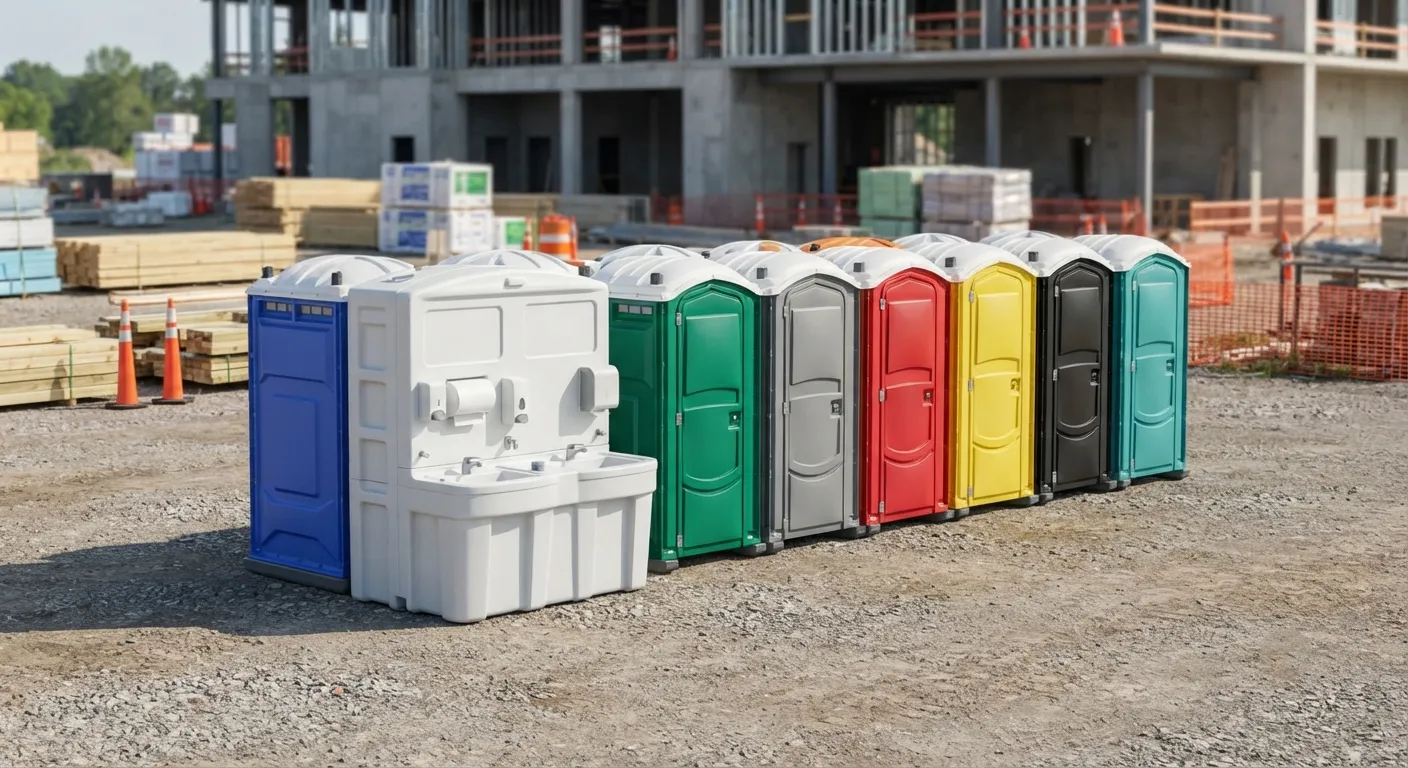
Shelters need more than toilets. They need water, handwashing, and enough fixtures for the number of people sleeping there. OSHA 1926.51(c) sets construction-site toilet ratios: one facility for 20 workers or fewer, then one toilet and one urinal per 40 workers up to 200. It is written for job sites, but disaster response crews use the same ratio as a starting point for shelter planning because it is a defensible, tested standard. OSHA 1926.51(a)(1) also requires an adequate supply of potable water at any place of employment, which matters for relief workers stationed for long shifts.
Handwashing is separate from toilets and often gets skipped in a rush. 29 CFR 1910.141(d)(2) requires soap and towels or a hand-drying device at washing stations, not just sanitizer, since hand sanitizer does not satisfy that requirement. A handwashing station rental or a bank of portable sink rental units covers that gap fast, and pairing them with a hand sanitizer station rental adds a second layer for high-traffic entry points. If your shelter is also feeding people, review our handwashing requirements page before crews show up so the count is right the first time.
For anyone with a mobility limitation staged at a shelter, ADA Standards section 213.2 requires that at least 5 percent of clustered single-user toilets, and never fewer than one, be accessible. An ada accessible porta potty unit meets that without slowing down the rest of the deployment, and it is worth reviewing ADA restroom requirements if you are staffing a shelter for more than a day or two.
Where Do Restroom Trailers and Storage Fit Into Recovery?
Once the immediate crisis passes, longer-term recovery work usually needs more than a row of portable toilets. A restroom trailer rental gives relief workers or displaced families a private, climate-controlled option, and a 2 stall restroom trailer is often enough for a small command post, while an 8 stall restroom trailer handles a larger staging site. If crews are showering after debris work, a shower trailer rental keeps people functional through a multi-week deployment.
Recovery also generates equipment and supplies that need secure, weatherproof storage. A storage container rental or mobile office trailer rental gives a command team a dry place to stage tools, paperwork, and donated supplies, and a 20ft storage container is usually enough for a neighborhood-scale response. If the site needs to be secured against looting or foot traffic while it is being cleared, a temporary fence rental or chain link temporary fence keeps the perimeter controlled. Crews working after dark benefit from a light tower rental, and if the grid is still down, a temporary power pole gets equipment running until utility crews restore permanent service. Bryan sits 11.0 miles northwest of College Station, and staging areas there sometimes need the same package we deliver in town, coordinated on the same run.
| unit | duration | typical price |
|---|---|---|
| standard | day | $150 |
| standard | week | $200 |
| ada | day | $230 |
| dumpster | day | $75 |
| fence | day | $50 |
How many toilets does a shelter of 100 people need?
Using the OSHA 1926.51(c) ratio as a planning baseline, 100 people would fall into the tier requiring roughly one toilet and one urinal per 40 people, meaning at least two to three fixture sets. Actual shelter counts vary by duration and population, so check our how many porta potties do I need guide before ordering.
Can you deliver if roads are partially blocked?
Often yes, but we need to know conditions first. Roll-off and trailer deliveries need about 60 feet of clear space behind the truck, so downed trees or debris piles change the plan. Call ahead with a site description so we can route the right vehicle.
Do you provide handwashing stations without full restroom units?
Yes. A handwashing station rental or portable sink rental can deploy on its own, separate from toilets, which is common at feeding sites or donation centers where handwashing matters most.
Is emergency service different from a standard order?
Emergency requests move faster through our scheduling but follow the same delivery process. Start with our emergency porta potty rental page or the emergency septic service line if your issue is tank-related.
What if my septic system backs up during a disaster?
That usually means the tank needs pumping or the line is blocked. Review septic tank warning signs first, then request septic tank cleaning so a technician can assess it before further use.
Next step
Get a delivery date
Tell us the address, the dates and the headcount. We size the order and confirm the route.